Every writer knows the feeling of a finished work slowly emerging from a rough, formless draft. Michelangelo knew that feeling in marble.
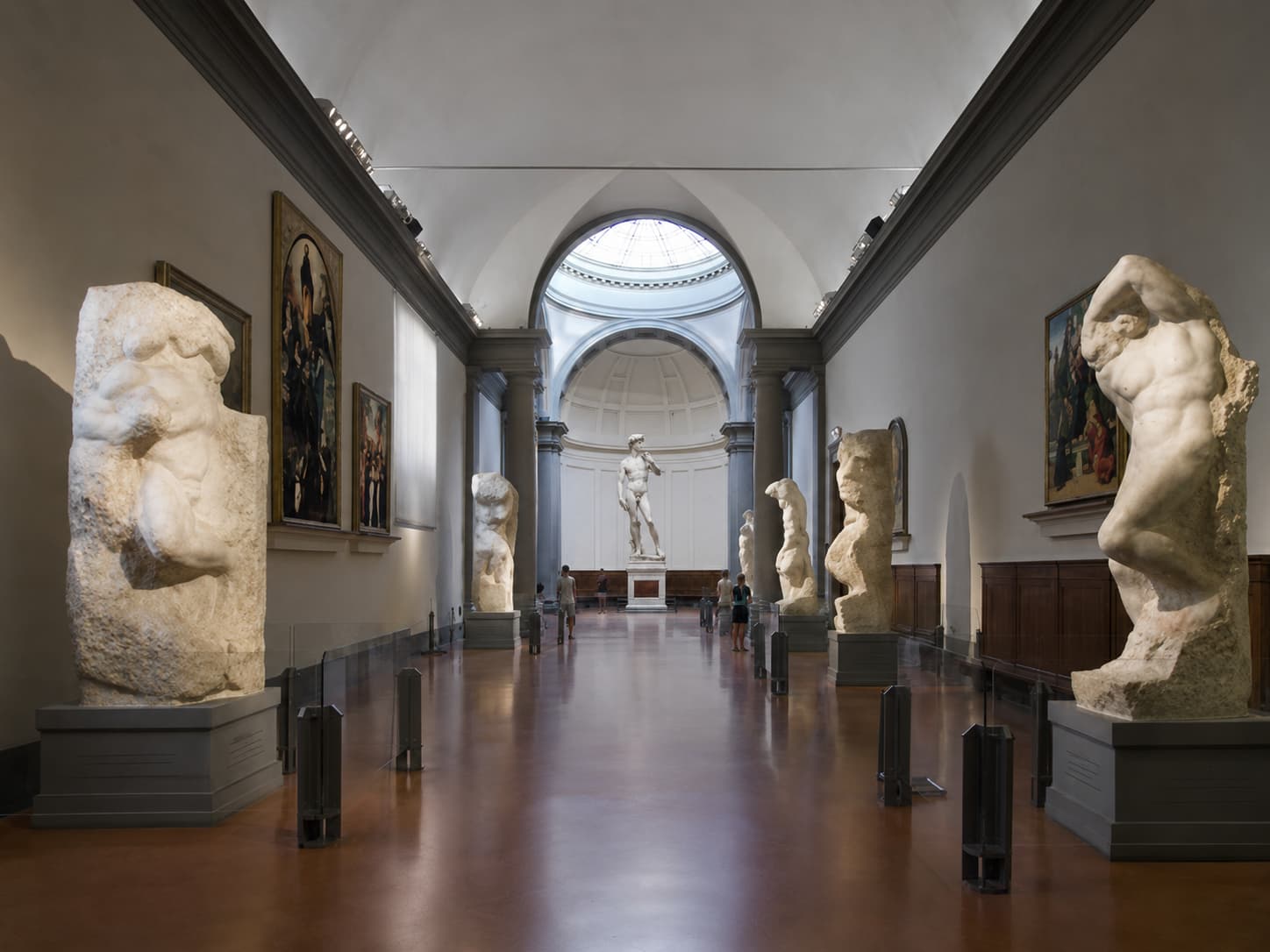
At the Accademia Gallery in Florence, you can stand before both the finished masterpiece and the raw struggle behind it. There is his David, arguably the most perfect sculpture ever carved, and just down the corridor leading up to it, his unfinished Prisoners, half-formed figures still fighting their way out of the stone. Michelangelo said he simply freed the figure he already saw trapped inside the block, which is about the truest description of the creative process anyone has ever offered. And it all sits in the city that gave the world the Renaissance and the Italian language itself.
The Accademia is compact but essential, and how you experience it depends on your time and how deep you want to go. One thing is non-negotiable, though.
The gallery is Florence’s second-most-visited museum, and the walk-up queues are brutal, often one to three hours in peak season. Booking skip-the-line, timed-entry tickets is the single most important thing you can do. A guide or audio guide is what turns a tall statue into a story. Here are the best ways to experience it, ranked.
1. Compare and Book It All in One Place
The Accademia offers standard tickets, skip-the-line timed entry, guided tours, and combined museum passes, and the difference between booking well and booking badly is hours of your life spent in line. Sorting the options is worth getting right. Accademia Gallery Skip the Line Tickets is a platform built around this museum, so instead of guessing you get the ticket and tour options laid out clearly with the timing sorted.
The value could not be simpler: it helps you secure a timed slot and skip a queue that can swallow an entire afternoon, and choose between a quick self-guided visit and a deeper guided one. For a museum this popular, that clarity is priceless.
You can compare Accademia tickets and tours here and lock in your slot before you go, which genuinely transforms the visit.
Best for anyone who wants to walk straight in rather than wait in line. If you have already booked, you are set.
2. The Masterpiece: Michelangelo’s David
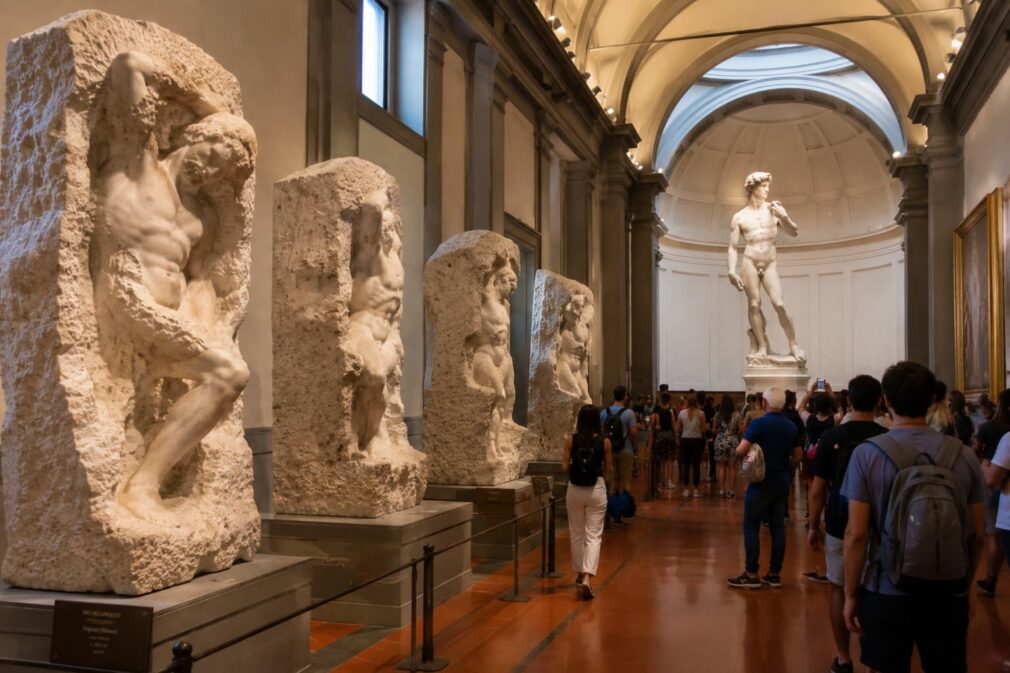
This is why the world comes. Standing over five metres tall in his purpose-built domed tribune, the original David, completed in 1504, is the defining work of the High Renaissance and, for many, the single most memorable thing they will ever see. The one in the piazza outside is a copy, this is the real thing, carved from a single flawed block of Carrara marble that other sculptors had abandoned.
Up close, the detail is staggering, from the tension in the veins of his hand to the coiled readiness in his stance. It rewards slow looking, and understanding the story of how it was made deepens the awe.
The tribune fills with tour groups from mid-morning, so an early or late slot lets you have a rare quiet moment with him.
Best for every visitor. This is the unmissable heart of the Accademia.
3. Works in Progress: The Prisoners
For a creative soul, this may be the most moving part of all, and most people hurry past it. Lining the corridor toward David are Michelangelo’s Prisoners, four unfinished sculptures of figures who seem to be wrenching themselves out of the rough, unworked stone. Michelangelo left them deliberately incomplete, and the effect is extraordinary: you are watching the act of creation frozen mid-struggle.
Anyone who has ever wrestled a book out of a blank page will feel a jolt of recognition here. It is the perfect visual metaphor for the messy, effortful business of making something whole from raw material.
Without context it is easy to mistake these for damaged works rather than intentional ones, so this is exactly where a guide or audio guide earns its keep.
Best for writers, artists, and anyone fascinated by how great work gets made.
4. Beyond Michelangelo: The Wider Collection
The Accademia holds more than its two headline acts. The Hall of the Colossus showcases Giambologna’s dramatic full-scale plaster model, and rooms of luminous Florentine Gothic and Renaissance paintings, including a delicate Botticelli, offer a gentler counterpoint to Michelangelo’s power. Do not miss the Museum of Musical Instruments, home to a rare original piano by Bartolomeo Cristofori, the very inventor of the instrument.
These quieter corners are where you escape the David crowds and appreciate the museum’s roots as a teaching collection for artists. They add real depth to what can otherwise be a rushed dash to the statue.
Many visitors skip these entirely, which is a shame, so leave yourself a little extra time.
Best for art lovers who want more than the highlight reel.
5. Make It a Florence Day: The Renaissance City
The Accademia is small, taking one to two hours, so build a proper Florence day around it. It sits just a seven-minute walk from the Duomo, and pairs naturally with the Uffizi, the Piazza della Signoria where David’s replica stands in his original spot, and the Bargello’s sculpture collection.
Wandering this city, you are treading the streets that birthed the Renaissance and shaped the very language of Dante and Boccaccio. For anyone who loves books and ideas, Florence is a living library.
Trying to do the Accademia and the vast Uffizi in one day is ambitious, so book the Accademia early and pace yourself.
Best for travelers who want to soak up the cradle of Western art and letters.
A Few Practical Things Before You Go
Book ahead, and book skip-the-line. The Accademia is open Tuesday to Sunday, roughly 8:15am to 6:50pm, and closed every Monday. Walk-up lines can run for hours, while a pre-booked timed ticket gets you in within minutes through a reserved entrance. Reserve two to four weeks ahead, and longer in summer.
Time it for calm. The first slot at 8:15am is the quietest, midweek is better than weekends, and the busiest crush is between roughly 10am and 2pm. In summer, look out for special late Tuesday and Thursday evening openings, when David stands in near-empty, beautifully lit galleries. Consider an audio guide or a licensed guide, since it transforms the visit, especially at the Prisoners.
For official information, the Galleria dell’Accademia site has current hours and details, and UNESCO’s listing covers the historic centre of Florence. Both pair well with any related travel and cultural guides already on the site.
Choosing the Right One for You
The Accademia rewards visitors who plan ahead and look beyond the headline.
Start by comparing your options through Accademia Gallery Skip the Line Tickets so you skip the queue and get the right experience. Here for the icon, give David the time he deserves. Moved by the making of art, linger at the Prisoners. Wanting more, explore the paintings and the musical instruments. Building a bigger day, weave the gallery into the wider Renaissance city.
However you do it, remember what you are really looking at: proof that a masterpiece is not found ready-made but coaxed, slowly and stubbornly, out of raw material. Every writer, every maker, will leave that gallery understanding their own craft a little better. Like the great works that endure on our shelves, David has moved people for five centuries, and he is waiting to move you too.
Author note: recommendations here reflect the Accademia’s tickets and hours as of 2026. Prices, opening times, and special evening openings change, so confirm the current details and book ahead before you go.